
Introduction: A Calm, Confident Start to Your First Spain Trip
The first thing you notice in Spain isn’t a landmark — it’s a feeling. Café chairs scrape gently against stone sidewalks, conversations hum around you, and the evening light lingers far longer than expected. Life feels unhurried here, as if the day has learned how to breathe.
If this is your first time visiting Spain, that atmosphere can be both enchanting and slightly disorienting. You’re excited — of course you are — but you might also be wondering if you’re doing things “right.” Are you eating too early? Is everything closed because it’s afternoon? Did you miss something important about how things work here?
This guide brings clarity to those questions. These Spain travel tips are designed to help you understand the rhythm, customs, and practical realities of traveling through Spain — from cultural etiquette and daily timing to money basics, transportation, and essential do’s and don’ts. It’s written to help you feel prepared without feeling rushed, informed without feeling overwhelmed.
Whether you’re traveling as a family, exploring Spain’s culture more deeply, or simply visiting for the first time and wanting things to go smoothly, this is a calm, respectful, family-friendly starting point — the kind of guidance that lets you relax into the experience instead of fighting it.
TL;DR • Spain travel tips at a glance
What first-time visitors should know before landing in Spain
Spain is easy to love — but it runs on its own rhythm. Knowing a few cultural norms, timing habits, and practical basics ahead of time can turn a good first trip into a calm, confident one.
- Timing matters: Meals are late, evenings are lively, and afternoons slow down — adapting your schedule makes everything feel easier.
- Culture is regional: Spain isn’t one single culture; each region has its own traditions, pace, and identity worth respecting.
- Getting around is simple: Trains, buses, and domestic flights are reliable, and comparing options in one place helps first-timers plan confidently.
- Money & meals are relaxed: Cards are widely accepted, tipping is minimal, and lingering over food is part of daily life — not a problem.
Gentle reminder: Spain rewards travelers who slow down, follow local rhythms, and leave room for unplanned moments — especially when traveling with family or for cultural discovery.

✨ Free travel toolbox
Free London map & travel toolkit
Grab a beautifully organized London travel map plus a mini bundle of planning resources to make future city trips feel calmer and more intentional.
- Key neighborhoods, highlights, and photo-friendly spots
- Simple tools for budgeting, bookings, and navigation
- Designed for busy, tech-savvy travelers and families
No spam, ever — just thoughtful travel emails and resources you can actually use.
Understanding Spain’s Rhythm (Why Timing Matters More Than You Think)
One of the biggest adjustments for first-time visitors isn’t the language or the food — it’s time itself. Spain doesn’t run late. It runs differently.
Spain Runs on a Different Clock
In Spain, mornings start slowly, afternoons stretch out, and evenings arrive with energy rather than exhaustion. Lunch often happens between 2 and 4 p.m. Dinner rarely begins before 8:30 p.m. Nights stay lively, especially in warmer months.
Trying to force your usual schedule onto Spain can quickly lead to frustration. Restaurants seem closed. Shops shut just when you’re ready to browse. You end up hungry at the wrong times.
Instead, let the rhythm guide you. One of the most memorable moments for many travelers happens during their first evening paseo — that gentle stroll locals take through plazas at sunset. Families wander together, children play freely, and the day softens into night. It’s not an event. It’s simply how life unfolds.
Siesta Culture: What It Is (and What It Isn’t)
Siesta is often misunderstood. It’s not a universal nap time where everything shuts down and streets go silent.
In modern Spain, siesta is more about shifting energy than stopping it entirely. Smaller shops, local businesses, and family-run restaurants may close for a few hours in the early afternoon, especially outside major cities. Museums, large stores, and attractions usually stay open, particularly in tourist-friendly areas.
For families, this rhythm can actually work in your favor. Plan museums or indoor activities earlier in the day, then use mid-afternoon as a rest window — a snack, downtime at your accommodation, or a quiet park visit — before heading out again in the evening.
Sundays, Holidays & Regional Differences
Spain takes its rest days seriously. Sundays are slower, and many shops close, especially outside city centers. Public holidays can vary not just nationally, but by region and even by city.
This matters because Spain isn’t one unified calendar. A holiday in Barcelona might be a regular workday in Madrid. Planning ahead helps you avoid surprise closures and makes it easier to align your itinerary with what’s actually open — a key piece of Spain travel advice for anyone visiting for the first time.
👉 Trusted travel tools
Helpful links that keep trips smoother and costs in check.
Wise: fair currency exchange
Pay like a local and avoid hidden FX fees when booking trains, stays, and tours.
VisitorsCoverage: flexible cover
Compare travel insurance options that fit your trip length, style, and budget.
Airalo: easy local data
Install an eSIM before you fly so maps, tickets, and messaging work the moment you land.
Cultural Etiquette in Spain: Do’s & Don’ts You’ll Be Glad You Knew
Spanish culture is warm, social, and deeply human. You don’t need perfect manners or fluent Spanish — just a bit of awareness and openness.
Do Greet People — Even Briefly
A simple greeting goes a long way. Saying hola when entering a shop, café, or elevator is considered polite and respectful. The same goes for buenos días or buenas tardes.
You don’t need to speak much Spanish to be well received. Making the effort — even with one word and a smile — signals respect and earns warmth in return.
Don’t Rush Meals (Especially Lunch & Dinner)
Meals in Spain aren’t transactions. They’re social moments.
Lunch and dinner are meant to be enjoyed, not hurried. Waitstaff won’t bring the bill unless you ask, and lingering at the table is normal. For families, this slower pace can feel surprisingly relaxing once you adjust. If you’re dining out with kids, shared plates and flexible ordering are common and welcomed.
Reservations help, especially for dinner. But once you’re seated, allow the experience to unfold without watching the clock.
Do Dress with Context in Mind
Spain is relaxed, but context matters.
In cities and coastal towns, casual clothing is widely accepted. In churches, rural villages, and cultural sites, modest attire is appreciated — shoulders covered, shorts of reasonable length.
This isn’t about strict rules. It’s about signaling respect for place and tradition, something locals notice even if they never comment on it.
Don’t Assume Spain Is “One Culture”
Spain is a mosaic of identities. Catalonia, Andalusia, the Basque Country, and Galicia each have distinct traditions, languages, and rhythms.
You don’t need to master the differences, and you certainly don’t need to navigate politics. Simple awareness is enough. Recognizing that each region has its own character — and treating it with curiosity rather than assumptions — is one of the most meaningful Spain do’s and don’ts.
Getting Around Spain Smoothly (Without Overcomplicating It)
Transportation in Spain is efficient, modern, and traveler-friendly — once you understand the basics.
Trains, Buses & Domestic Flights: What First-Timers Should Know
Spain’s rail network connects major cities quickly and comfortably. High-speed trains link places like Madrid, Barcelona, Seville, and Valencia, making rail travel one of the easiest ways to move around.
Buses often make more sense for smaller towns, coastal routes, or regions where trains don’t reach directly. They’re reliable and usually very affordable.
Domestic flights are practical when distances are long — for example, traveling between mainland Spain and the islands, or crossing the country when time is limited.
A Simple Way to Compare Routes
For first-time visitors, the challenge isn’t availability — it’s clarity. Comparing trains, buses, and flights across different providers can feel fragmented.
Tools like Omio help simplify this by showing multiple transport options in one place. Seeing routes, travel times, and prices side by side saves time and reduces decision fatigue, especially when you’re still learning how Spain’s transport system fits together.
Do You Need a Car in Spain?
It depends on where you’re going.
A car is useful for exploring villages, wine regions, and rural areas like parts of Andalusia or northern Spain. It gives you flexibility and access to places public transport doesn’t easily reach.
In major cities, a car quickly becomes a burden. Parking is limited, traffic is dense, and public transport is excellent. For most first-time visitors, trains and local transit are the smoother choice.
Money in Spain: Smart, Stress-Free Basics for First-Time Visitors
Handling money in Spain is simpler than many travelers expect, but a few small choices can make it even smoother.
Cash vs Cards: What’s Actually Used
Cards are widely accepted across Spain, including in restaurants, hotels, and shops. Contactless payments are common in cities and larger towns.
Cash is still helpful in smaller villages, local markets, bakeries, and cafés. Carrying a modest amount is wise, but there’s no need to rely on cash for everything.
Avoiding Bad Exchange Rates
Airport exchange desks often offer poor rates and high fees. Withdrawing money from ATMs or using cards designed for international travel usually provides better value.
Services like Wise are popular with travelers because they offer transparent exchange rates and straightforward spending abroad, helping you avoid unpleasant surprises.
Tracking Your Travel Budget Without Obsessing
Staying aware of spending doesn’t have to mean tracking every coffee.
If you like having a general overview without micromanaging, light tools such as TravelSpend can help you see where your money is going during the trip — useful for longer journeys or family travel — without turning budgeting into a chore.
What Things Actually Cost in Spain (Quick Reality Check)
Spain is often more affordable than travelers expect — especially compared to Northern Europe — but costs still vary by region, season, and travel style.
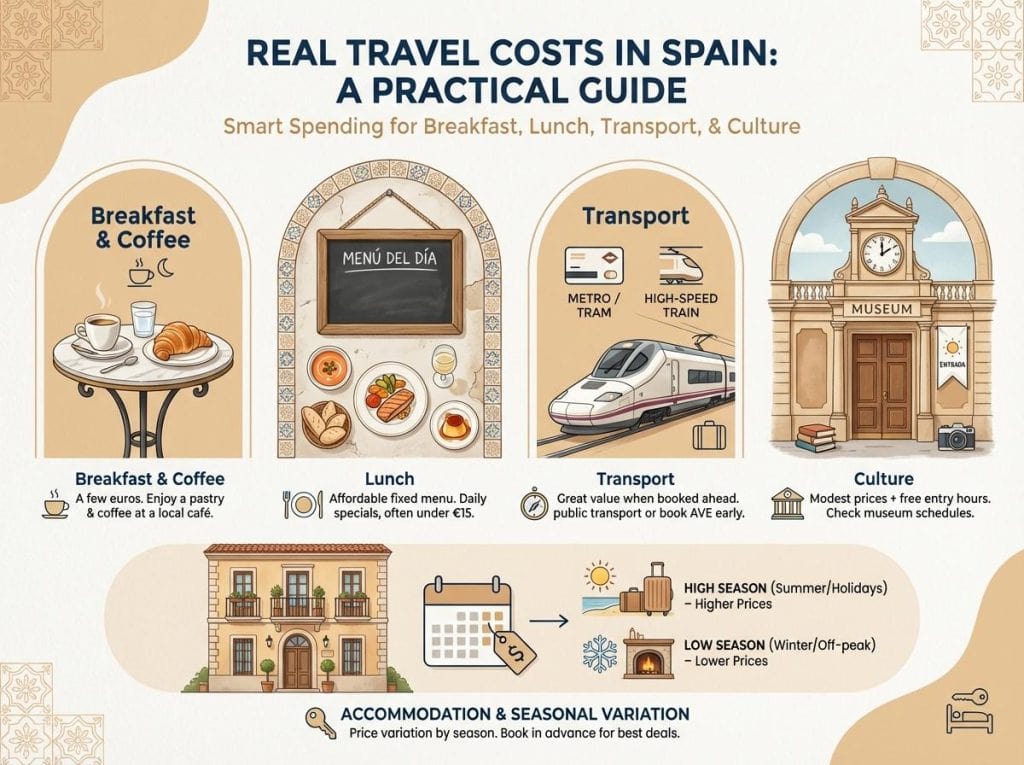
In most cities, a casual breakfast or coffee costs just a few euros, while a relaxed lunch menu (menú del día) typically includes multiple courses for a reasonable fixed price. Dinner tends to be slightly more expensive, particularly in tourist-heavy areas or popular coastal destinations.
Public transport is generally good value, with metro and bus rides costing far less than taxis, and long-distance trains offering strong value when booked ahead. Museum tickets and cultural attractions are usually modestly priced, and many cities offer free entry hours — especially helpful for families or slower-paced days.
Accommodation prices fluctuate the most. Major cities, beach destinations in summer, and August travel nationwide tend to push prices higher, while spring, autumn, and smaller towns often feel noticeably gentler on the budget.
The key takeaway for first-time visitors: Spain allows you to travel well without constantly watching every euro — especially if you plan around local rhythms and eat where locals do.
Eating & Drinking in Spain: Practical Tips That Prevent Awkward Moments
Spanish food culture is generous, social, and refreshingly uncomplicated once you understand the basics.
Do Order Like a Local (No Need to Overthink It)
Tapas aren’t just appetizers — they’re a way of sharing. Ordering several small dishes for the table is common, especially for groups and families.
Sharing plates makes meals flexible, kid-friendly, and relaxed. There’s no strict formula. Order what looks good, add more if you’re still hungry, and enjoy the process.
Don’t Expect Dinner at 6 PM
Dinner times vary slightly by region, but eating before 8 p.m. is rare. In cities like Madrid or Barcelona, kitchens may not even open until 8:30 or 9.
For families, a simple workaround is a late afternoon snack or merienda to bridge the gap. That way, everyone stays happy until dinner without fighting local customs.
Tipping in Spain: What’s Expected (and What’s Not)
Tipping is not obligatory in Spain.
Rounding up the bill or leaving small change for good service is appreciated but never expected. There’s no pressure to calculate percentages, and staff won’t judge you either way. A relaxed approach fits the culture best.
🗺️Interactive travel maps
See Your Trip Come Alive on the Map
A peek at how GaiaGazer’s curated travel maps look right inside your Google Maps app—ready to guide you through each city.


1 / 4
Staying Safe & Healthy While Traveling in Spain
Spain is widely considered one of Europe’s safest and most welcoming destinations. For most visitors, staying safe here is less about avoiding danger and more about understanding everyday urban awareness — the kind that lets you relax without lowering your guard.
Is Spain Safe for First-Time Visitors?
For first-time visitors, Spain generally feels calm and reassuring. Violent crime against tourists is rare, and cities are lively well into the evening, often filled with families, couples, and groups enjoying public spaces.
The most common issue travelers encounter is petty theft, particularly pickpocketing in crowded areas. Busy metro lines, popular attractions, festivals, and packed cafés are the main places to stay alert. Keeping bags zipped, wearing backpacks on your front in tight spaces, and avoiding phones or wallets in open pockets is usually enough.
With that small awareness in place, most travelers find Spain easy to navigate and genuinely welcoming.
Common Tourist Scams to Know (Without Fear-Mongering)
Spain doesn’t require constant vigilance, but knowing a few common situations helps you move confidently.
Some of the most typical scenarios include distraction techniques, such as someone asking for directions while an accomplice attempts to access a bag. In certain tourist hotspots, people may offer unsolicited help with ticket machines or attempt bracelet or flower “gifts” and then demand payment.
The key isn’t suspicion — it’s calm boundaries. A polite but firm “no, gracias” and continuing on your way is almost always enough. Locals do the same.
Travel Insurance: When It’s Worth Having
Spain has an excellent healthcare system, and emergency care is readily available. EU residents can use their European Health Insurance Card (EHIC), while non-EU visitors typically pay upfront or through insurance.
For travelers visiting from outside Europe, travel insurance is worth considering — not because Spain is unsafe, but because medical care, trip interruptions, or unexpected changes can happen anywhere. Providers like EKTA or VisitorsCoverage are often used by international travelers to cover medical emergencies, cancellations or delays in a straightforward way.
Having coverage isn’t about expecting problems. It’s about peace of mind.
Essential Apps & Tools for a Smoother Spain Trip
You don’t need dozens of apps to travel well in Spain. A few well-chosen tools can quietly simplify daily logistics without adding complexity.
Navigation & Day-to-Day Planning
Google Maps is more than sufficient for navigating Spain’s cities and towns. Downloading maps for offline use before heading out is especially helpful in areas with limited signal or when roaming data is restricted.
It’s reliable for walking directions, public transport routes, and estimating travel times — particularly useful in historic centers where streets aren’t always intuitive.
Transport & Logistics
For longer distances or intercity travel, having one place to compare options saves time. Omio is often used by travelers to view trains, buses, and flights together, helping first-time visitors quickly understand which routes make the most sense without juggling multiple platforms.
Money & Budget
Wise remains a practical option for spending abroad with transparent exchange rates, especially for card payments or ATM withdrawals.
If you prefer a light overview of daily expenses rather than detailed tracking, TravelSpend can help you stay aware of your budget during the trip — particularly useful for families or longer stays — without turning finances into a constant task.
The goal isn’t optimization. It’s ease.
Handy essentials
Helpful tools for first-time Spain travel
You don’t need a phone full of apps to travel well in Spain. These few essentials simply make the basics smoother — so you can spend less time troubleshooting and more time enjoying the day.
-
Google Maps (offline): Download the areas you’ll visit so walking directions still work when signal is spotty — especially useful in older neighborhoods and on day trips.
-
Omio (transport comparison): A simple way to compare trains, buses, and flights in one place when you’re choosing routes between cities or trying to avoid overcomplicating logistics.
-
Wise (currency & spending): Helps you pay and exchange currency with transparent rates, so you’re less likely to lose money to hidden fees or poor conversion at the wrong moment.
-
TravelSpend (budget overview): Great for a light daily check-in — especially for families — so you stay aware of your trip costs without tracking every euro.
If you’re traveling with kids or in a multi-generational group, keeping logistics simple is a quiet superpower. The fewer “small frictions” in your day, the more energy you’ll have for the moments you came for.
Spain Travel Mistakes First-Time Visitors Often Make
A little awareness goes a long way in avoiding common missteps that can quietly drain energy or enjoyment.
Overpacking the Itinerary
Spain rewards slower travel. Trying to squeeze multiple cities into a short timeframe often leads to rushed meals, missed moments, and constant transit.
Spending more time in fewer places allows you to experience local rhythms, revisit favorite spots, and leave space for spontaneous discoveries — the moments many travelers remember most.
Visiting Only Big Cities
Madrid and Barcelona are incredible, but Spain’s character truly opens up in smaller towns and regional cities. Places like Córdoba, Ronda, Girona, or Cádiz offer depth, beauty, and a slower pace that balances larger urban experiences.
Even a short detour can add richness to your journey.
Ignoring Local Food Timing
Eating too early or skipping meals because kitchens aren’t open yet can leave you tired and irritable.
Adapting slightly — adding a merienda, shifting dinner later, or planning lunches around local hours — helps maintain energy and keeps everyone in a better mood, especially when traveling with children.
Reality check
Quick reality check: common first-time Spain mistakes
-
Trying to fit too many cities into one trip instead of slowing down and letting places breathe.
-
Planning meals too early and ending up hungry or frustrated when kitchens aren’t open yet.
-
Treating Spain as one single culture instead of adjusting expectations by region.
-
Over-relying on taxis when public transport or trains are easier, cheaper, and less stressful.
-
Skipping smaller towns and villages that often deliver the most memorable experiences.
Gentle reminder: most “mistakes” in Spain aren’t serious — they’re small mismatches in timing or expectations. A little flexibility usually fixes everything.
Spain with Kids or Multi-Generational Travel (What to Expect)
Spain is often underestimated as a family destination. In reality, it’s one of Europe’s most naturally accommodating countries for travelers of all ages.
Why Spain Is Surprisingly Family-Friendly
Children are welcome almost everywhere. Late dinners are normal, and seeing kids out with parents well into the evening is part of everyday life. Restaurants are relaxed, servers are patient, and public spaces are designed for lingering rather than rushing.
Plazas act as communal living rooms, where generations gather, children play freely, and parents unwind nearby.
Practical Tips for Traveling with Children
Strollers are manageable in most cities, though historic centers may have cobblestones or stairs. Planning routes with parks or pedestrian areas helps.
Nap time doesn’t need to disappear — it just shifts. Mid-afternoon downtime aligns naturally with Spain’s slower hours, making evenings easier for everyone.
Most importantly, flexibility is welcomed. Spain’s culture doesn’t expect children to be quiet or invisible. Families are part of public life, not an exception to it.
✨Playful trip inspiration
Not Sure Where to Go Next?
Take a quick, low-pressure travel quiz and let GaiaGazer match you with destinations, travel styles, and ideas that actually fit your energy, budget, and season of life.
- Fun, bite-sized questions—no sign-up required to play.
- Results tailored for families, couples, and solo explorers.
- Perfect for sparking new trip ideas when you’re stuck deciding.
Memorable Mentions: Small Tips That Make a Big Difference
- Carry a reusable water bottle. Many cities have safe drinking water, and refilling saves money and waste.
- Learn five basic Spanish phrases. Even simple greetings create warmer interactions.
- Expect crowds in August. It’s peak travel season for locals and visitors alike.
- Respect local noise norms at night. Evening life is lively, but residential areas value quiet later on.
Conclusion: Travel Spain with Confidence, Curiosity & Calm
Spain doesn’t ask you to master its culture — it invites you to meet it halfway. With a bit of awareness, flexibility, and openness, travel here becomes less about ticking boxes and more about settling into a rhythm that feels human and unhurried.
These Spain travel tips are meant to help you move through the country with confidence, cultural respect, and a sense of ease — whether you’re traveling solo, as a couple, or with family in tow.
Take your time. Follow the light into the evening. Let meals linger and plans breathe. Spain has a way of rewarding those who don’t rush it.
If you’re ready to go deeper, exploring region-specific guides or gentle itineraries can help you shape a journey that fits your pace — and leaves room for the moments you didn’t plan at all.
Your Ultimate Travel Companion
Frequently Asked Questions About Traveling to Spain for the First Time
A few calm, practical answers to the questions travelers ask most when planning their first trip to Spain — from timing and money to transport and etiquette.
What’s the biggest culture shock for first-time visitors in Spain?
For many travelers, it’s the rhythm: later meals, longer evenings, and a slower pace in the afternoon. Once you plan around that clock (instead of fighting it), Spain tends to feel easier and more relaxing. A simple adjustment like shifting dinner later or adding a mid-afternoon snack can change your whole day.
Do I need to carry cash in Spain, or is card payment enough?
Cards work in most places, especially in cities, but a small amount of cash is still useful for markets, small cafés, rural towns, and occasional taxis. If you’re traveling beyond major hubs, having both options keeps things smooth. Many travelers use a travel-friendly card (like Wise) to avoid unpleasant exchange surprises.
Is Spain safe for tourists, and where should I be extra careful?
Spain is generally very safe for tourists, including first-time visitors. The main risk is pickpocketing in crowded areas like busy metro lines, popular attractions, and nightlife zones in big cities. Keep your phone and wallet secure, zip bags closed, and treat distractions politely but firmly.
What’s the easiest way to travel between cities in Spain?
High-speed trains are often the most comfortable option between major cities, while buses can be excellent for smaller towns and certain coastal routes. Domestic flights can make sense for longer distances or island travel when time is tight. If you’re comparing options, using a single platform like Omio can save time and reduce planning stress.
Do I need a car for my first trip to Spain?
Not usually — especially if you’re focusing on major cities, where trains and local transit are easier than parking and driving. A car becomes more useful when you want villages, countryside routes, or remote beaches that are harder to reach by public transport. Many travelers do a “cities by train, countryside by car” approach to keep the trip balanced.
What are a few simple etiquette tips that help you blend in?
Greet people when you enter shops or cafés, be patient with slower meal pacing, and dress with a bit more modesty in churches or traditional towns. A warm “hola” and “gracias” goes a long way even if you don’t speak Spanish fluently. When in doubt, follow the local tone — calm, respectful, and unhurried.
Should I buy travel insurance for Spain?
If you’re visiting from outside the EU, travel insurance is often worth it for medical coverage and trip disruptions, even though Spain is generally safe. Spain’s healthcare system is excellent, but unexpected care can be costly without coverage. Options like EKTA or VisitorsCoverage are commonly used by travelers who want simple protection without overthinking it.
How do I keep my Spain trip budget under control without tracking every euro?
A light “daily check-in” works better than detailed logging for most people. Track only the big categories (transport, meals, attractions) and leave room for small joys like cafés and local treats. If you like having a simple overview, TravelSpend can help you stay aware without turning budgeting into homework.

Created by a travel-obsessed couple with years of real-world trips


📌 Love cultural travel? Explore more ideas on Pinterest →



Comments