Introduction: Santorini, Slower and Softer
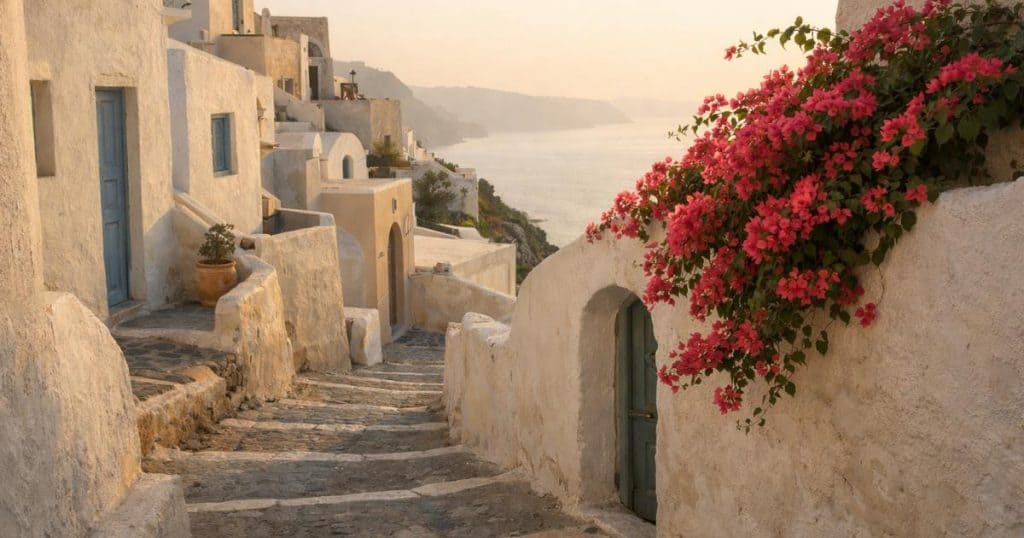
Santorini is often introduced through a single image: whitewashed villages stacked above the sea, blue domes glowing at sunset, crowds gathered shoulder to shoulder for the view. It’s beautiful—but it’s also incomplete.
If you’ve been drawn to Santorini but quietly worried it might feel rushed, noisy, or overwhelming, you’re not alone. Many travelers arrive dreaming of calm beauty and connection, only to feel swept into peak-hour congestion. This guide to santorini beyond the crowds is for those who want something gentler.
Beyond the viewpoints, Santorini is an island of villages, light, and rhythm. It’s early mornings when the streets are still quiet, inland towns where locals greet one another by name, and evenings that unfold slowly rather than on a schedule. Experiencing Santorini this way doesn’t require skipping the island altogether—it simply asks for different timing, different places, and a softer mindset.
In the sections ahead, you’ll learn when Santorini feels most peaceful, which villages reveal a quieter side of the island, and how small planning choices can turn a crowded destination into a deeply personal experience.
TL;DR • Santorini at a calmer pace
A softer way to experience the island
Santorini doesn’t have to feel rushed or crowded. With the right timing, quieter villages, and a slower mindset, the island reveals a far more peaceful and meaningful side.
- Timing matters most: Early mornings, late afternoons, and shoulder seasons dramatically reduce crowds.
- Look beyond the icons: Inland villages like Pyrgos, Emporio, and Megalochori show everyday island life.
- Walk with intention: Short caldera paths and vineyard roads offer beauty without pressure.
- Slow is better: Fewer stops, longer meals, and unplanned pauses lead to deeper memories.
Gentle reminder: Santorini rewards presence, not checklists. Let the island’s rhythm guide you.

✨ Free travel toolbox
Free London map & travel toolkit
Grab a beautifully organized London travel map plus a mini bundle of planning resources to make future city trips feel calmer and more intentional.
- Key neighborhoods, highlights, and photo-friendly spots
- Simple tools for budgeting, bookings, and navigation
- Designed for busy, tech-savvy travelers and families
No spam, ever — just thoughtful travel emails and resources you can actually use.
Why Santorini Feels So Crowded (And When It Doesn’t)
Santorini’s reputation as one of Greece’s most iconic islands means it attracts a high volume of visitors—especially during specific hours and seasons. Understanding why it feels crowded is the first step toward knowing when it doesn’t.
The Cruise Ship Effect and Peak-Day Pressure
A significant portion of Santorini’s daytime crowds comes from cruise ship arrivals. On busy days, multiple ships anchor offshore, bringing thousands of visitors to Fira between late morning and mid-afternoon. The result is predictable congestion around cable car stations, main streets, and caldera viewpoints.
It’s important to approach this with perspective. Tourism supports local livelihoods, from drivers and shop owners to restaurant staff and artisans. Crowds aren’t something to “escape” so much as something to navigate thoughtfully, with respect for the island and the people who call it home.
The Quiet Hours Most Visitors Miss
Santorini changes character early in the day and again in the evening. Before 9 a.m., villages feel unhurried. Streets are swept, cafés prepare for the day, and the light is soft rather than blinding.
Late afternoons—after cruise visitors depart and before sunset crowds gather—can also feel surprisingly calm. Shoulder seasons amplify this effect even more. April, May, late September, and October offer breathing room without sacrificing beauty.
Micro-moment: watching sunrise light slide across whitewashed walls while shutters are still closed and the island feels entirely its own.
👉 Trusted travel tools
Helpful links that keep trips smoother and costs in check.
Wise: fair currency exchange
Pay like a local and avoid hidden FX fees when booking trains, stays, and tours.
VisitorsCoverage: flexible cover
Compare travel insurance options that fit your trip length, style, and budget.
Airalo: easy local data
Install an eSIM before you fly so maps, tickets, and messaging work the moment you land.
The Best Times to Experience Santorini Beyond the Crowds
Choosing when to visit Santorini matters just as much as choosing where to go. Timing alone can transform your experience.
Visiting in Shoulder Season (April–May, Late September–October)
These months bring warm days, cooler evenings, and a noticeably slower pace. The caldera still glows, vineyards are active, and village life feels present rather than performative.
Shoulder season is especially well-suited to couples and slower travelers who value atmosphere over nightlife. Walks are comfortable, reservations are easier, and conversations with locals feel less rushed.
Daily Timing That Changes Everything
Even in peak summer, structuring days around local rhythms helps avoid pressure. Plan outdoor walks early, enjoy long lunches when streets are quieter, and save rest or pool time for the busiest hours.
For families, this rhythm is particularly helpful. Early starts align with cooler temperatures, while midday downtime prevents exhaustion. Slower afternoons create space for everyone to recharge rather than push through crowds.
Quiet Villages That Show a Different Side of Santorini
While Oia and Fira dominate postcards, Santorini’s inland villages reveal a more grounded, lived-in island—one defined by routine, community, and time.
Pyrgos: The Island Before the Crowds
Pyrgos sits on one of the island’s highest points, offering panoramic views without the pressure of sunset spectacle. This former capital retains a strong sense of local life, with winding paths leading past homes, chapels, and small cafés.
Pyrgos is ideal for travelers who want perspective—both literal and emotional—on the island.
Emporio: Winding Alleys and Fortress Calm
Emporio feels almost hidden, despite being one of Santorini’s largest villages. Its fortified medieval layout was designed for protection, and today it creates a natural sense of enclosure and calm.
Stone corridors twist unexpectedly, opening into small courtyards and chapels. This is a place to wander slowly, appreciating architecture shaped by centuries of adaptation rather than tourism.
Megalochori: Village Squares and Gentle Evenings
Megalochori offers a warm, intimate atmosphere, especially in the early evening. Locals gather in the central square, children play nearby, and tavernas fill gradually rather than all at once.
It’s an excellent choice for couples seeking ambiance over spectacle, and for travelers who value conversation, shared plates, and unhurried evenings more than sunset crowds.
Where to Stay for a Quieter Santorini (Without Losing the Magic)
If crowds are your biggest worry, your home base matters more than your to-do list. These areas make it easier to start early, pause at midday, and enjoy Santorini’s light in the calm hours—without feeling like you’re constantly navigating congestion.
Imerovigli (Caldera Views, Quieter Than Fira)
Best for: couples, slower travelers, “walkable but calm” stays.
- Why it’s quieter: fewer day visitors compared to Fira, especially at night.
- Stay style: small boutique hotels, cave-style suites, terraces for sunrise coffee.
- Look for: soundproofing, a private outdoor space, and easy access to a main path.
Pyrgos or Megalochori (Village Rhythm + Easy Drives)
Best for: cultural explorers, travelers who want “real village” evenings.
- Why it’s quieter: inland villages are less affected by cruise-day surges.
- Stay style: restored traditional homes, small guesthouses, local squares nearby.
- Look for: parking (if you’ll drive), fewer stairs, and a shaded courtyard.
Kamari or Perissa (Beach Base + More Space)
Best for: families, budget-minded trips, travelers who want a simple daily rhythm.
- Why it’s calmer: flatter areas, beach routine, and less “sunset rush” pressure.
- Stay style: family rooms, apartment-style stays, easy beach access.
- Look for: shade, breakfast options, and a midday reset spot (pool or quiet room).
Oia (Only If You Choose the Right Micro-Area + Timing)
Best for: travelers who truly want Oia, but want fewer pinch points.
- How to keep it calm: stay just outside the core lanes and plan early/late walks.
- Stay style: quiet cave rooms, small terraces, places that feel private even in high season.
- Look for: luggage help/porters (steps), clear access notes, and a “no street noise” mention.
Where to Walk When You Want Space, Not Viewpoints
Santorini’s beauty isn’t limited to postcard overlooks. Some of the island’s most peaceful moments happen on paths that don’t lead to a famous photo spot at all.
The Caldera Paths Less Traveled
The full Fira–Oia hike is well known—and often busy. But smaller caldera segments offer the same dramatic geology with far fewer people. Walking short stretches near Imerovigli early in the morning, or heading south from Fira rather than north, allows you to enjoy the caldera’s scale without feeling hurried.
These quieter paths invite a slower pace. You can stop without blocking anyone, listen to the wind moving through low grasses, and notice how the volcanic rock shifts color as the light changes.
Inland Walks and Vineyard Roads
Away from the cliff edge, Santorini opens into wide, understated landscapes. Dirt roads between vineyards, chapels, and farmland reveal an agricultural island many visitors never see.
Micro-moment: dust rising softly under your shoes, cicadas humming in the heat, and long, uninterrupted views beneath an open sky.
These walks are especially family-friendly. They offer space to roam, fewer safety concerns than cliff paths, and a chance for children to experience Santorini as a living place rather than a single viewpoint.
Beaches That Feel Calm, Not Curated
Santorini’s beaches don’t fit the classic Greek island image—but that’s part of their appeal. Volcanic sand, sculpted cliffs, and fewer facilities often mean fewer crowds.
Vlychada and Koloumbos
Vlychada Beach is known for its dramatic, wind-carved cliffs and open feel. Even during summer, it rarely feels packed, especially on weekdays.
Koloumbos Beach is more rugged and natural, attracting travelers who value space and simplicity over sunbeds and music. Facilities are minimal, so preparation is key—but the reward is quiet and uninterrupted sea views.
Both beaches encourage respect for the landscape. Staying on paths, avoiding cliff climbing, and packing out trash help preserve their fragile environment.
How Beach Timing Matters More Than Location
Arriving early or later in the afternoon makes a noticeable difference. Mornings bring calm seas and cooler temperatures, while late afternoons feel spacious as day-trippers leave.
For families, timing matters more than choosing a “perfect” beach. Space to spread out, fewer distractions, and a calmer atmosphere often matter more than amenities.
🗺️Interactive travel maps
See Your Trip Come Alive on the Map
A peek at how GaiaGazer’s curated travel maps look right inside your Google Maps app—ready to guide you through each city.


1 / 4
Eating Well Without the Dinner Rush
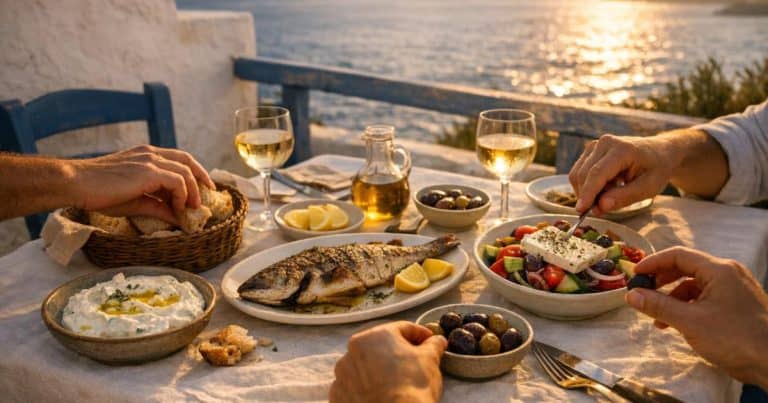
Food is one of Santorini’s quiet pleasures—especially when you adjust when and where you eat.
Lunch Over Dinner: A Simple Shift
Many travelers focus on dinner reservations, but lunch often delivers the same quality with half the noise. Kitchens are less rushed, service is more relaxed, and views are just as beautiful in daylight.
This shift also aligns well with local rhythms. Meals are meant to be enjoyed slowly, not squeezed between activities.
Choosing Tavernas Away From Sunset Zones
Restaurants directly beside famous sunset viewpoints tend to fill early and turn tables quickly. Moving just a few streets away often leads to more personal service and a calmer atmosphere.
These meals feel less like an event and more like an evening—something that stays with you long after the trip ends.
Staying Mindful: Santorini as a Place, Not a Checklist
Santorini rewards presence more than productivity. Letting go of a rigid itinerary often leads to deeper satisfaction.
Letting Go of the “Must-See” Mentality
Trying to experience everything can create pressure where none is needed. Choosing fewer places—and allowing time within them—often reveals moments you didn’t know to look for.
This mindset shift reduces stress and opens space for curiosity rather than comparison.
Slower Days Create Deeper Memories
For couples, slower pacing allows for shared discovery without distraction. For families, it means fewer meltdowns and more genuine connection.
Santorini doesn’t need to be conquered. It invites you to meet it where it is—quietly, if you let it.
✨Playful trip inspiration
Not Sure Where to Go Next?
Take a quick, low-pressure travel quiz and let GaiaGazer match you with destinations, travel styles, and ideas that actually fit your energy, budget, and season of life.
- Fun, bite-sized questions—no sign-up required to play.
- Results tailored for families, couples, and solo explorers.
- Perfect for sparking new trip ideas when you’re stuck deciding.
Memorable Mentions: Small Choices That Make a Big Difference
- Start your days earlier than you think you need to
- Focus on one village per day instead of several
- Plan pauses, not just plans
- Respect private spaces and local routines
- Let light—not schedules—guide your timing
Conclusion: Finding Your Own Santorini Beyond the Crowds
Santorini’s beauty isn’t diminished by its popularity—but it is reshaped by how you experience it. With thoughtful timing, quieter villages, and a willingness to slow down, santorini beyond the crowds becomes not just possible, but deeply rewarding.
This softer version of the island offers space to breathe, notice, and connect—whether you’re traveling as a couple, a family, or simply as someone curious about places beyond their surface.
If you’ve experienced Santorini in a quieter way, or if you’re planning a slower visit, feel free to share your thoughts. Travel becomes richer when we learn from one another’s moments—not just their photos.
Frequently Asked Questions: Santorini Beyond the Crowds
A few calm, practical answers to the questions travelers ask when they want a quieter, more meaningful Santorini.
What’s the quietest time of day to explore Oia or Fira?
Early morning is usually the calmest window, especially before shops fully open and day visitors arrive. Late afternoon can also feel quieter between peak daytime traffic and sunset crowds. If you’re sensitive to congestion, plan your photos and strolling for those “in-between” hours and save indoor breaks for midday.
Which villages feel most authentic and less crowded than Oia?
Pyrgos, Emporio, and Megalochori often feel more local and slower-paced, especially in the evenings. You’ll find winding lanes, small squares, and a gentler rhythm that’s less focused on viewpoints. They’re ideal if you want Santorini’s character without the constant “move along” feeling.
Is Santorini still worth visiting in summer if I dislike crowds?
Yes—if you build your days around timing and pacing. Start early, choose a quieter village or beach for midday, and keep sunset plans flexible. Even in peak season, a “slow travel” approach can make Santorini feel calm and personal.
Are there peaceful beaches on Santorini that don’t feel packed?
Vlychada and Koloumbos often feel more spacious than the busier beach areas, especially on weekdays. They’re more natural and less “resort-like,” so it helps to bring what you need (water, shade, snacks). Arriving early or later in the day makes the biggest difference.
How can families do Santorini without overstimulating kids?
Plan one main “out-and-about” window in the morning, then schedule a calm midday reset (pool time, quiet lunch, nap). Choose inland villages for slower wandering, and avoid stacking multiple big stops in one day. A simpler rhythm keeps the island enjoyable for everyone—especially in warm weather.

Created by a travel-obsessed couple with years of real-world trips
Your Journey, Beautifully Organized
Free AI Itinerary Builder
A gentle, fast way to shape your perfect trip — tailored routes, family-friendly pacing, and cultural picks in seconds.
- Instant day-by-day plans
- Adapts to your style & timing
- Save, edit, and refine anytime
Premium Curated Trips
Prefer a fully handcrafted experience? Let our travel designers create a seamless, beautifully balanced itinerary for you.
- Expert human planning
- Handpicked stays & experiences
- Flexible support levels


📌 Love cultural travel? Explore more ideas on Pinterest →



Comments