Introduction
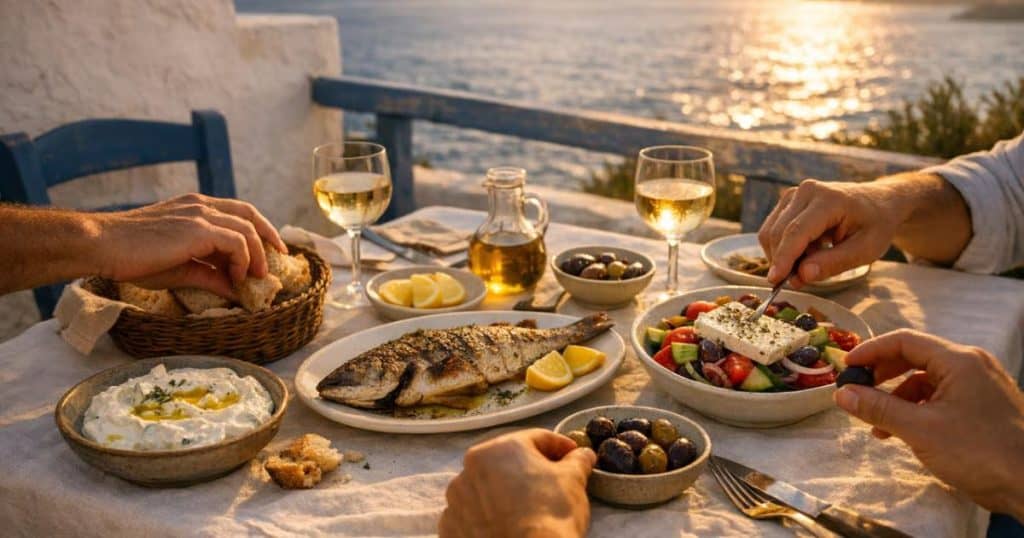
The first thing you notice when you arrive in Greece isn’t a landmark or a view—it’s the rhythm of food. Tables spill onto sidewalks, plates arrive slowly, and conversations stretch long after the last bite. Meals here aren’t squeezed between plans; they are the plan.
For many travelers, that warmth comes with uncertainty. Menus may be unfamiliar, dishes aren’t always clearly explained, and the fear of ordering “wrong” can quietly follow you into every taverna. Add a language barrier, and even confident travelers can hesitate.
This greek food guide is here to change that feeling.
Think of it as a calm, culturally respectful companion—one that helps you understand what you’re seeing on the table, how Greek meals are meant to unfold, and how to order with ease and confidence, even if you don’t speak Greek.
Inside, you’ll find:
- The Greek dishes worth trying beyond the usual clichés
- How Greek meals are structured and shared
- Simple, polite ways to order like a local
- Practical tips for families and cultural explorers alike
No pressure. No rush. Just the quiet confidence to sit down, order well, and enjoy what Greece does best—feeding people generously.
TL;DR • Greek food, at a glance
How to eat well in Greece—without stress
Greek meals are built around sharing, patience, and simple flavors. Once you understand the rhythm, ordering becomes relaxed and intuitive—even if you don’t speak Greek.
- Expect to share: Greek meals unfold slowly with small plates in the center of the table, not rushed individual courses.
- Start with the basics: Meze like tzatziki or melitzanosalata, followed by grilled meats or baked classics, rarely disappoint.
- Menus don’t need translation: Watching nearby tables, asking for recommendations, and ordering simply works everywhere.
- Families are welcome: Shared plates, flexible timing, and familiar flavors make dining with kids easy and relaxed.
Gentle mindset shift: eating in Greece isn’t about getting it “right” — it’s about slowing down and letting the meal lead.

✨ Free travel toolbox
Free London map & travel toolkit
Grab a beautifully organized London travel map plus a mini bundle of planning resources to make future city trips feel calmer and more intentional.
- Key neighborhoods, highlights, and photo-friendly spots
- Simple tools for budgeting, bookings, and navigation
- Designed for busy, tech-savvy travelers and families
No spam, ever — just thoughtful travel emails and resources you can actually use.
Understanding Greek Food Culture Before You Order
Before looking at individual dishes, it helps to understand how food works in Greece. Eating in Greece is guided less by efficiency and more by connection, pace, and shared experience.
Why Food in Greece Is About Sharing, Not Speed
Greek meals are rarely about individual plates arriving all at once. Instead, food is meant to be shared, tasted together, and enjoyed slowly.
It often begins with a few small dishes placed in the center of the table. Then another plate arrives. Then another. The table fills gradually, almost casually, as conversation flows and time stretches.
For first-time visitors, this can feel unstructured. In reality, it’s intentional.
There’s no expectation to rush, reorder immediately, or clear plates quickly. Lingering is normal. Staying after you’ve finished eating is encouraged. In many tavernas, you’re not renting a table—you’re being hosted.
What a Typical Greek Meal Looks Like
A traditional Greek meal usually follows a loose rhythm rather than strict courses.
It often starts with bread and a few starters—spreads, salads, or small fried dishes. Main dishes may follow, but they’re often ordered together with the starters, not separately. Sides like potatoes or vegetables are shared. Water and bread stay on the table throughout.
Ordering “for the table” is common and expected. Instead of one dish per person, groups often choose several items to share, tasting a little of everything.
For families, this style is especially forgiving. Children can try small bites without committing to a full dish, and familiar options can easily sit alongside something new.
Classic Greek Dishes Every Traveler Should Try
Greek cuisine is simple at heart, built on good ingredients and clear flavors. You don’t need to order boldly to eat well—you just need to know where to start.
Greek Starters and Small Plates (Meze)
Meze are small dishes meant for sharing, and they’re often the most memorable part of a meal.
- Tzatziki is cool and creamy, made with yogurt, cucumber, and garlic.
- Taramosalata is smooth and slightly briny, made from fish roe and olive oil.
- Melitzanosalata is smoky and rich, based on roasted eggplant.
They arrive with bread and invite slow tasting. A good rule of thumb is to order two to three meze for every two people, then add more if you’re still hungry.
These dishes are gentle introductions to Greek flavors—familiar, comforting, and perfect for easing into the cuisine.
Main Dishes You’ll See Across Greece
Some dishes appear on menus all over the country, and for good reason.
- Moussaka is baked, layered, and comforting.
- Souvlaki refers to grilled skewered meat, usually pork or chicken.
- Gyros is shaved meat cooked on a vertical spit, often served wrapped in pita.
- Pastitsio is a baked pasta dish with meat sauce and béchamel.
A common confusion is gyros versus souvlaki. Gyros is sliced from a rotating spit; souvlaki is grilled on skewers. Both are popular, but they’re prepared differently.
For families, grilled meats are usually a safe and familiar choice. Flavors are mild, portions are generous, and sides like potatoes or rice are easy to share.
Seafood and Coastal Specialties
Along the coast and on the islands, seafood takes center stage.
Grilled octopus is tender and lightly charred. Calamari is often simply fried, crisp on the outside and soft inside. Fresh fish is usually sold by weight and may not be listed clearly on the menu.
Instead of relying on photos, it’s common to ask what fish is fresh that day. The server may even show it to you before cooking.
If seafood isn’t your preference, most tavernas also offer meat or vegetarian options. You’re never expected to order fish just because you’re near the sea.
Regional Greek Dishes Worth Knowing About
Greek food changes subtly from place to place, shaped by geography, history, and local pride. Noticing these differences adds depth to the experience.
Island Dishes vs Mainland Traditions
On the islands, dishes tend to be lighter, with more legumes, seafood, and vegetables. In Santorini, fava—a smooth yellow split-pea purée—is a local staple, often paired with capers or onions.
In mainland regions like Epirus, hearty cheese pies reflect mountain traditions and colder winters. In Crete, wild greens, olive oil, and simple grilled dishes dominate the table.
Greeks are proud of their regional foods, and asking about local specialties is often met with enthusiasm.
What to Order Based on Where You Are
A simple framework helps avoid generic ordering:
- Islands: legumes, seafood, vegetable-based dishes
- Mountain villages: slow-cooked meats, pies, stews
- Cities: a wider mix, often with regional influences
Letting your location guide your choices usually leads to better meals—and more meaningful conversations.
👉 Trusted travel tools
Helpful links that keep trips smoother and costs in check.
Wise: fair currency exchange
Pay like a local and avoid hidden FX fees when booking trains, stays, and tours.
VisitorsCoverage: flexible cover
Compare travel insurance options that fit your trip length, style, and budget.
Airalo: easy local data
Install an eSIM before you fly so maps, tickets, and messaging work the moment you land.
How to Read a Greek Menu (Even If You Don’t Speak Greek)
Greek menus can feel intimidating at first glance, especially when translations are minimal or missing altogether. The good news is that you don’t need fluency to order well. A little pattern recognition and a relaxed approach go a long way.
Common Greek Food Words You’ll Recognize
Even without knowing Greek, certain words appear again and again—and they’re surprisingly intuitive.
You’ll often see terms that describe how food is prepared rather than elaborate dish names. Grilled items are common, as are baked and fried dishes. “Fresh” and “homemade” are frequently highlighted, especially in smaller tavernas that take pride in simple cooking.
If you’re unsure, look around. What other tables are eating is often the best guide. Greek dining culture is visual, and it’s perfectly acceptable to point and ask what something is.
When Menus Are Only in Greek
In more local spots, menus may be handwritten or entirely in Greek. This isn’t meant to exclude visitors—it’s simply how things are done.
A polite smile and a simple question usually solve everything. Many servers will happily recommend a few popular dishes or explain what’s good that day. Even saying “What do you recommend?” is often enough to start a friendly exchange.
There’s no expectation that you’ll understand everything. Curiosity and openness are far more important than precision.
How to Order Food in Greece Like a Local
Ordering in Greece isn’t about efficiency or getting everything right the first time. It’s about ease, flexibility, and trust in the kitchen.
Simple Greek Phrases That Go a Long Way
You don’t need to memorize full sentences to make a good impression. A few polite words—hello, please, thank you—are always appreciated, even if your pronunciation isn’t perfect.
What matters most is tone. Speaking calmly, making eye contact, and showing interest communicates respect far more clearly than flawless language.
If you forget the words, that’s okay too. Greeks are used to visitors, and kindness carries more weight than correctness.
How Much to Order (And What’s “Too Much”)
A common mistake is ordering too much too quickly.
Because dishes are shared, it’s often better to start with a few items and add more later. Bread, salads, and meze fill you up faster than expected, and portions are rarely small.
If you do end up with leftovers, that’s not awkward. Asking to take food with you is normal and widely accepted.
Timing Matters: When Greeks Actually Eat
Meal times in Greece may be later than what many travelers are used to.
Lunch usually stretches into the early afternoon, and dinner often starts well after sunset. Restaurants are prepared for this rhythm, and no one will rush you to order or leave.
For families, flexibility is common. Kitchens are usually happy to serve children earlier, and the relaxed atmosphere makes dining with kids far less stressful than expected.
🗺️Interactive travel maps
See Your Trip Come Alive on the Map
A peek at how GaiaGazer’s curated travel maps look right inside your Google Maps app—ready to guide you through each city.


1 / 4
Dining Etiquette in Greece: What Travelers Should Know
Greek dining etiquette is refreshingly simple. There are very few rigid rules, and most expectations revolve around courtesy and patience.
Tipping in Greece: What’s Expected
Tipping is appreciated but not mandatory.
Rounding up the bill or leaving a small amount for good service is common, especially in sit-down restaurants. There’s no pressure to calculate exact percentages, and no one will be offended if you don’t tip extravagantly.
Bread, Water, and Table Customs
Bread often arrives automatically and may be charged separately. Bottled water is standard, and you can always ask for tap water if you prefer.
Service is unhurried by design. Servers won’t check on you constantly, not because they’re inattentive, but because giving space is considered respectful.
If you need something, a small gesture or eye contact is usually enough.
Eating in Greece With Kids
Traveling with children doesn’t complicate dining in Greece—it often enhances it.
Why Greek Restaurants Are Kid-Friendly by Nature
Greek culture is deeply family-oriented, and that warmth extends to restaurants.
Children are welcome, noise is tolerated, and meals are seen as social gatherings rather than formal events. Late dinners, shared plates, and open-air seating make it easier for kids to feel included rather than confined.
Easy Orders for Picky Eaters
Even selective eaters usually find something they enjoy.
Grilled chicken, simple meats, fries, bread, rice, and yogurt with honey are widely available. Many dishes can be customized, and servers are generally accommodating when it comes to children’s preferences.
There’s no expectation for kids to finish everything on their plate. Meals are about presence, not performance.
Common Food Mistakes First-Time Visitors Make
Most dining “mistakes” in Greece aren’t serious—they’re simply moments of misunderstanding.
Ordering Too Fast or Too Much
Ordering everything at once can overwhelm the table.
Greek meals unfold gradually, and it’s perfectly fine to pause, eat, and decide what you want next. Slowing down often leads to a better experience overall.
Expecting “Greek Food” to Match Home Versions
Dishes may look familiar but taste different from what you’re used to.
Greek cuisine relies on balance and restraint rather than heavy seasoning. Letting go of expectations and meeting dishes on their own terms usually leads to pleasant surprises.
✨Playful trip inspiration
Not Sure Where to Go Next?
Take a quick, low-pressure travel quiz and let GaiaGazer match you with destinations, travel styles, and ideas that actually fit your energy, budget, and season of life.
- Fun, bite-sized questions—no sign-up required to play.
- Results tailored for families, couples, and solo explorers.
- Perfect for sparking new trip ideas when you’re stuck deciding.
Memorable Mentions: Small Food Moments Travelers Love
Some of the most lasting food memories aren’t full meals at all.
Morning bakeries filled with the scent of warm pastry. A quick espresso standing at the counter. A small plate of fruit or dessert quietly placed on the table at the end of a meal, offered with a smile.
These gestures aren’t advertised. They’re simply part of how hospitality works.
Conclusion
Greek food isn’t something to conquer or decode—it’s something to ease into.
With a bit of cultural context and a willingness to share, even unfamiliar menus become invitations rather than obstacles. This greek food guide isn’t about ordering perfectly. It’s about sitting comfortably at the table, trusting the process, and letting meals unfold as they’re meant to.
If you’ve had a dish in Greece that surprised you, or a dining moment that stayed with you, consider sharing it. Food stories are often where travel memories begin—and Greece has a way of making them linger.
Frequently Asked Questions About Greek Food for Travelers
A few practical details travelers often wonder about when ordering in tavernas, reading menus, and eating in Greece with confidence.
How many dishes should we order in a Greek taverna?
Greek meals are usually shared, so you don’t need one main dish per person. A simple approach is to start with a salad, 2–3 small plates (meze) for every two people, and one main to share—then add more only if you’re still hungry. Portions can be generous, and ordering gradually often feels more natural.
What’s the difference between souvlaki and gyros?
Souvlaki is usually grilled meat on skewers, while gyros is meat cooked on a vertical spit and sliced into strips. Both are often served with pita and simple toppings, but the cooking style is different. If you want a cleaner, grilled flavor, souvlaki is a safe bet; if you want something juicy and classic street-food style, try gyros.
Is it okay to ask for recommendations if the menu isn’t in English?
Yes—this is completely normal, especially in local spots. A warm “What do you recommend?” and a bit of curiosity usually leads to the best meal of the trip. If you have preferences (vegetarian, no seafood, mild flavors), mention them simply and you’ll usually be guided kindly.
How does ordering fresh fish work in Greece?
In many seaside tavernas, fresh fish is priced by weight rather than listed as a fixed dish. It’s fine to ask what’s fresh today, how it’s prepared, and roughly what it will cost before you commit. If you’re unsure, start with something simpler like grilled calamari or a seafood pasta to ease in.
What are easy Greek foods for kids or picky eaters?
Grilled chicken, simple souvlaki, potatoes, rice, bread, and yogurt with honey are usually the easiest wins. Because dishes are meant to be shared, kids can try small bites without pressure. If your child prefers plain flavors, you can ask for simple grilled meat and keep the table’s dips and salads as optional “tiny tastes.”

Created by a travel-obsessed couple with years of real-world trips
Your Journey, Beautifully Organized
Free AI Itinerary Builder
A gentle, fast way to shape your perfect trip — tailored routes, family-friendly pacing, and cultural picks in seconds.
- Instant day-by-day plans
- Adapts to your style & timing
- Save, edit, and refine anytime
Premium Curated Trips
Prefer a fully handcrafted experience? Let our travel designers create a seamless, beautifully balanced itinerary for you.
- Expert human planning
- Handpicked stays & experiences
- Flexible support levels


📌 Love cultural travel? Explore more ideas on Pinterest →




Comments