
Introduction: Your First Trip to Greece, Without the Overwhelm
The first thing many travelers remember about Greece isn’t a landmark—it’s the feeling. Light bouncing off white stone. The low hum of a café just opening for the morning. The sea, never far away, even when you can’t quite see it yet. Greece has a way of feeling both ancient and alive, welcoming and slightly mysterious, all at once.
And yet, planning that first trip can feel anything but calm. Which islands make sense? How do ferries work? Is it expensive? Will the crowds ruin the experience? This greece travel guide for first-time visitors was created for exactly that moment—when excitement and uncertainty exist side by side.
This guide is designed to simplify, not overload. Instead of endless lists and rushed “must-sees,” you’ll find clear guidance on culture, timing, transportation, and everyday logistics—so you arrive feeling prepared, confident, and relaxed.
Think of this as a step-by-step, human introduction to Greece. Not a checklist. Not a race. Just practical advice, cultural context, and gentle reassurance to help you enjoy your first Greek journey at your own pace.
TL;DR • Greece, first trip essentials
A calm, practical way to plan your first time in Greece
Greece is an approachable, rewarding destination for first-time visitors—especially when you plan with a slower pace, realistic routes, and a basic understanding of local culture and logistics.
- Why it works for first-timers: Friendly locals, widespread English, walkable cities, and a mix of culture, food, and beaches make Greece easy to navigate.
- Best timing to go: Spring and fall offer the most comfortable weather and fewer crowds; summer is lively but requires more patience and planning.
- Getting around: Cities are best explored on foot and by metro, while ferries connect islands—just avoid squeezing too many stops into one trip.
- Cultural basics to know: Expect late dinners, shared meals, relaxed pacing, and simple etiquette—small gestures of respect go a long way.
Gentle mindset shift: plan fewer places, leave space for rest, and let Greece’s rhythm guide your days rather than the clock.

✨ Free travel toolbox
Free London map & travel toolkit
Grab a beautifully organized London travel map plus a mini bundle of planning resources to make future city trips feel calmer and more intentional.
- Key neighborhoods, highlights, and photo-friendly spots
- Simple tools for budgeting, bookings, and navigation
- Designed for busy, tech-savvy travelers and families
No spam, ever — just thoughtful travel emails and resources you can actually use.
Is Greece a Good Destination for First-Time International Travelers?
If you’re visiting Greece for the first time—especially if it’s your first or second international trip—the short answer is yes. Greece is one of Europe’s most approachable destinations, even for travelers who usually prefer simplicity and structure.
Why Greece Feels Approachable (Even on Your First Trip Abroad)
Greece combines deep history with modern convenience in a way that feels intuitive rather than intimidating. English is widely spoken in tourist areas, transportation is straightforward once you understand the basics, and locals are generally warm, patient, and used to welcoming visitors.
You’ll find a rare balance here: world-class historical sites, everyday neighborhood life, incredible food, and beaches that feel almost unreal. Many towns are walkable, meals are unhurried, and the rhythm of the day encourages you to slow down—something first-time travelers often appreciate more than they expect.
Greece also works beautifully for different travel styles. Couples enjoy its romance and sunsets. Families appreciate its safety, open spaces, and welcoming attitude toward children. Solo travelers often find it easy to navigate and socially comfortable.
What First-Time Visitors Often Worry About (and Why It’s Easier Than You Think)
Language barriers:
While Greek is the official language, English is commonly spoken in hotels, restaurants, transportation hubs, and attractions. Even when it isn’t, people are usually happy to help with gestures and patience.
Getting around islands:
Ferries may seem confusing at first, but routes are well-established and signage is clear. Once you understand that island hopping takes time, it becomes manageable rather than stressful.
Costs and budgeting:
Greece can be very reasonable compared to other Western European destinations. With a mix of affordable food, free sights, and flexible accommodation options, costs are easier to control than many expect.
Cultural etiquette:
Greek culture is relaxed, expressive, and forgiving. A polite greeting, patience at mealtimes, and respectful clothing at religious sites go a long way.
👉 Trusted travel tools
Helpful links that keep trips smoother and costs in check.
Wise: fair currency exchange
Pay like a local and avoid hidden FX fees when booking trains, stays, and tours.
VisitorsCoverage: flexible cover
Compare travel insurance options that fit your trip length, style, and budget.
Airalo: easy local data
Install an eSIM before you fly so maps, tickets, and messaging work the moment you land.
When Is the Best Time to Visit Greece for the First Time?
Choosing the right season is one of the most important Greece travel tips for first-time visitors. Timing shapes everything—from crowds and prices to how relaxed your days feel.
Spring (April–May): Calm, Cultural, and Comfortable
Spring is one of the most rewarding times to visit Greece for the first time. The weather is mild, landscapes are green, and major sites are far less crowded than in summer.
Athens is especially pleasant during these months, with comfortable temperatures for walking and sightseeing. Popular islands are waking up, but haven’t yet reached peak intensity. Spring evenings often end quietly, with long meals in tavernas where locals linger and conversations stretch late into the night.
Summer (June–August): Lively but Crowded
Summer is Greece at its most energetic—and its most demanding. This is when beaches shine, nightlife peaks, and ferry routes are busiest.
First-time visitors should be aware that July and August bring intense heat, packed ferries, and higher prices, especially on famous islands. Families may want to plan slower days, midday rest breaks, and accommodations close to beaches or shade. Summer can be magical, but it requires more patience and planning.
Fall (September–October): A Sweet Spot for First Visits
Early fall is often considered the ideal season for a first trip. The sea remains warm, crowds thin out, and logistics become noticeably easier.
September and October offer a balance of beach time and cultural exploration, making them especially appealing for cultural explorers who want depth without rush. Many locals also feel more relaxed after the peak season ends.
Winter (November–March): When It Makes Sense—and When It Doesn’t
Winter can work well for travelers focused on cities, culture, and food rather than beaches. Athens and Thessaloniki remain lively, museums are quiet, and prices drop.
Most islands, however, slow down significantly or partially close. Winter travel suits those seeking local life and history, not island hopping or swimming.
Understanding Greek Culture Before You Go
Learning a few Greece travel basics before arrival can transform your experience from pleasant to deeply meaningful. Greek culture values connection, hospitality, and time—especially shared time.
Everyday Greek Etiquette (Simple Things That Matter)
Greeks greet warmly, often with eye contact and a friendly tone. Personal space is closer than in some cultures, and conversations can feel expressive and animated.
At churches and monasteries, modest clothing is expected. Covered shoulders and knees show respect, even at popular sites. Dining is unhurried—meals are social moments, not quick refueling stops.
Greek Mealtimes and Food Culture
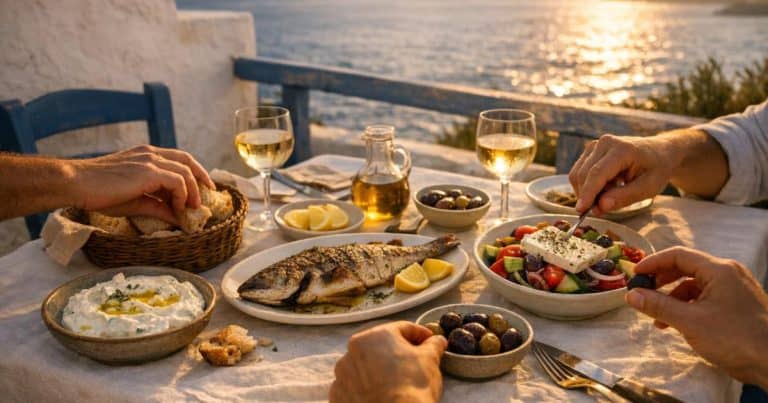
Dinner in Greece typically starts later than many visitors expect, often after 8:30 or 9:00 PM. Meals are meant to be shared, with dishes placed in the center of the table.
It’s common to order “just one more plate”—and somehow end up with three. Desserts may arrive unasked, offered as a gesture of hospitality rather than obligation. This generosity is part of everyday life, not a performance.
Tipping, Politeness, and What’s Considered Rude
Tipping is appreciated but not obligatory. Rounding up the bill or leaving a small amount is sufficient in most situations.
Rushing meals, snapping fingers to get attention, or treating service as transactional can feel impolite. A calm tone, patience, and simple courtesy are always valued.
How to Get Around Greece as a First-Time Visitor
Transportation in Greece is simpler than it first appears, especially when you plan with realistic expectations.
Getting Around Cities (Athens, Thessaloniki)
Major cities are best explored on foot and by public transport. Athens’ metro system is clean, efficient, and easy to navigate, with English signage throughout.
Taxis are widely available and affordable by European standards. For first-time visitors, combining walking with metro or taxis offers the least stressful experience.
Traveling Between Islands
Ferries are the backbone of Greek island travel. Routes are frequent in high season, but schedules vary by island and weather.
Booking ferries in advance during summer is wise. One common mistake is trying to visit too many islands in one trip. Travel days take time, and each island deserves space to be enjoyed fully.
Is Renting a Car in Greece a Good Idea?
Renting a car can be helpful on large islands like Crete or for mainland road trips, where public transport is limited.
In cities and smaller islands, however, cars often add stress. Narrow roads, limited parking, and walkable towns mean many first-time visitors enjoy Greece more without one.
🗺️Interactive travel maps
See Your Trip Come Alive on the Map
A peek at how GaiaGazer’s curated travel maps look right inside your Google Maps app—ready to guide you through each city.


1 / 4
Money, Payments, and Costs in Greece
Understanding how money works in Greece ahead of time removes a surprising amount of stress—especially for first-time visitors who don’t want small logistics to interrupt their days.
Currency Basics and Paying Day to Day
Greece uses the euro (€), and cards are widely accepted in cities, tourist areas, hotels, and most restaurants. Contactless payments are common, even for small purchases like coffee or pastries.
That said, it’s still wise to carry some cash. Small tavernas, local bakeries, taxis, and beachside spots—especially on quieter islands—may prefer or require it. ATMs are easy to find in cities and major towns, though availability can be limited in remote areas.
Budget Expectations for First-Time Visitors
Greece offers a wide range of travel styles, which makes budgeting flexible rather than rigid.
Food is often one of the best surprises. A generous meal at a local taverna can be far more affordable than expected, especially outside peak season. Museums and archaeological sites are reasonably priced, and many outdoor experiences—views, beaches, village walks—cost nothing at all.
Travelers often overspend not on essentials, but on trying to do too much. Slowing the pace usually saves money without sacrificing experience.
Simple Money Tips That Make Travel Smoother
- Withdraw cash in larger amounts to minimize ATM fees
- Keep small bills for taxis and cafés
- Track daily spending loosely rather than obsessively
For travelers managing multiple currencies or international cards, tools like Wise can help simplify exchange rates and reduce unexpected fees—but it’s not essential if your bank card already offers fair international terms.
Where to Stay in Greece on Your First Trip
Choosing the right place to stay matters more than choosing the “perfect” hotel. Location, walkability, and ease often shape your experience far more than luxury.
Best Areas for First-Time Visitors in Athens
Central neighborhoods are ideal for a first visit. Staying within walking distance of major sights allows you to explore early mornings and evenings—often the most atmospheric times.
Look for areas with easy metro access and plenty of cafés nearby. Being close to daily life makes Athens feel welcoming rather than overwhelming.
Island Stays: What First-Timers Should Prioritize
On islands, prioritize proximity over prestige. Staying near the main town or port reduces reliance on transport and allows spontaneous wandering.
First-time visitors often enjoy being within walking distance of restaurants, beaches, and shops rather than isolated cliffside stays that require constant planning.
Hotels vs. Apartments for Families and Longer Stays
Families and longer stays often benefit from apartment-style accommodations. Extra space, kitchen access, and laundry options make daily rhythms easier.
Hotels, on the other hand, can be ideal for short stays or travelers who prefer simplicity and built-in services. Neither is “better”—the right choice depends on pace and needs.
Where to stay • first-time friendly
Choose the easiest base, not the “perfect” one
For a first trip to Greece, the most stress-free stays are usually the ones that keep you walkable, connected, and flexible—so your days feel simple even when plans change.
- Prioritize location: a central neighborhood in Athens or a main town/port on an island saves time and taxi logistics.
- Look for flexibility: free cancellation or easy date changes matter more than tiny upgrades.
- Families: consider extra space, a kitchen, and laundry access—small comforts that make everything smoother.
Ready to shortlist stays without opening 20 tabs?
Gentle tip: If you’re traveling in July–August, book earlier than you think you need to—then build your itinerary around your base, not the other way around.
Planning Your First Greece Itinerary (Without Doing Too Much)
One of the most important mindset shifts for first-time visitors is accepting that Greece rewards fewer places, not more.
How Many Places Should You Really Visit?
For a first trip, two to three bases are usually ideal. This allows time to settle in, absorb the culture, and enjoy unplanned moments.
Travel days take longer than they appear on maps, especially when ferries are involved. Every move comes with packing, transport, and orientation time.
Classic First-Time Routes (High-Level)
Some well-balanced approaches include:
- Athens + one island for culture and relaxation
- Athens + Peloponnese for history and scenic drives
- Athens + Crete for variety without island hopping
Each option offers depth without constant transit.
Common Itinerary Mistakes First-Time Visitors Make
- Packing too many islands into one trip
- Underestimating ferry travel and delays
- Skipping rest days entirely
Leaving space in your schedule often leads to the most memorable moments—an unplanned swim, a long lunch, a sunset you didn’t expect.
What to Pack for Greece (That First-Time Visitors Often Forget)
Packing well isn’t about bringing more—it’s about bringing what actually supports your days.
Clothing and Footwear Essentials
Comfortable walking shoes are non-negotiable. Ancient sites, cobblestone streets, and village paths demand stable footwear.
Light layers are useful even in summer, especially in the evenings. Sun protection—hat, sunglasses, sunscreen—is essential.
Beach and Island-Specific Items
Quick-dry towels, water shoes for rocky beaches, and small backpacks for ferry days make island travel easier.
A light scarf or cover-up doubles as sun protection and modest attire for church visits.
Cultural and Practical Add-Ons
A reusable water bottle helps during long sightseeing days. Many cities have public fountains, and bottled water is inexpensive.
✨Playful trip inspiration
Not Sure Where to Go Next?
Take a quick, low-pressure travel quiz and let GaiaGazer match you with destinations, travel styles, and ideas that actually fit your energy, budget, and season of life.
- Fun, bite-sized questions—no sign-up required to play.
- Results tailored for families, couples, and solo explorers.
- Perfect for sparking new trip ideas when you’re stuck deciding.
Safety, Health, and Travel Confidence in Greece
Greece is widely considered a safe destination, even for first-time international travelers.
Is Greece Safe for Travelers?
Violent crime is rare, and most visits are trouble-free. Like any popular destination, petty theft can occur in crowded areas, so basic awareness is sufficient.
Families often find Greece especially welcoming, with children included naturally in daily life.
Health, Heat, and Staying Comfortable
Summer heat can be intense, particularly in cities. Planning sightseeing early in the day and resting midday makes a noticeable difference.
Pharmacies are common and well-stocked, and pharmacists are trained professionals who can assist with minor issues.
Memorable Mentions: Small Things That Make a Big Difference
- Sundays move slower than you expect
- Ferry schedules can change due to weather
- Complimentary desserts are often a genuine gesture
- Greeks value conversation as much as efficiency
These small details often shape how Greece feels long after the trip ends.
Conclusion: Starting Your First Greek Journey with Confidence
A first trip to Greece doesn’t need to be perfect to be meaningful. It simply needs space—for curiosity, for rest, and for moments that unfold naturally.
This greece travel guide for first-time visitors was designed to help you arrive informed but open, prepared but unhurried. Greece has a way of meeting travelers halfway, offering beauty and warmth without demanding mastery.
If this guide helped clarify your plans, consider sharing it with someone planning their own first Greek journey—or simply save it for the moment you begin packing. Greece will be ready when you are.
Frequently Asked Questions About Visiting Greece for the First Time
Clear, practical answers to common questions travelers still have when planning their first trip to Greece.
How many days do I need for my first trip to Greece?
Most first-time visitors feel comfortable with 7–10 days. This allows time for Athens plus one main region or island without feeling rushed. Shorter trips work best when you focus on a single base rather than trying to see everything.
Is island hopping a good idea for first-time visitors?
It can be, but only in moderation. First-time travelers often enjoy Greece more by choosing one island and settling in, rather than moving every few days. Ferry travel takes time, and fewer transitions usually lead to a calmer, richer trip.
Do I need to learn Greek before traveling to Greece?
No—English is widely spoken in tourist areas, hotels, restaurants, and transport hubs. Learning a few simple words, like hello or thank you, is appreciated but not required. Most visitors navigate comfortably without speaking Greek.
Is Greece suitable for families on their first visit?
Yes—Greece is generally very family-friendly. Children are welcomed naturally in restaurants and public spaces, and many destinations offer walkable centers, beaches, and relaxed dining that suit all ages. Planning a slower pace makes family travel especially enjoyable.
Is Greece expensive for first-time travelers?
Costs vary by season and location, but Greece can be surprisingly affordable. Everyday meals, public transport, and many cultural experiences are reasonably priced, especially outside peak summer months. Travelers often save money by slowing down rather than trying to fit too much into each day.

Created by a travel-obsessed couple with years of real-world trips
Your Journey, Beautifully Organized
Free AI Itinerary Builder
A gentle, fast way to shape your perfect trip — tailored routes, family-friendly pacing, and cultural picks in seconds.
- Instant day-by-day plans
- Adapts to your style & timing
- Save, edit, and refine anytime
Premium Curated Trips
Prefer a fully handcrafted experience? Let our travel designers create a seamless, beautifully balanced itinerary for you.
- Expert human planning
- Handpicked stays & experiences
- Flexible support levels


📌 Love cultural travel? Explore more ideas on Pinterest →





Comments